Cruciate Ligament Injury in Dogs
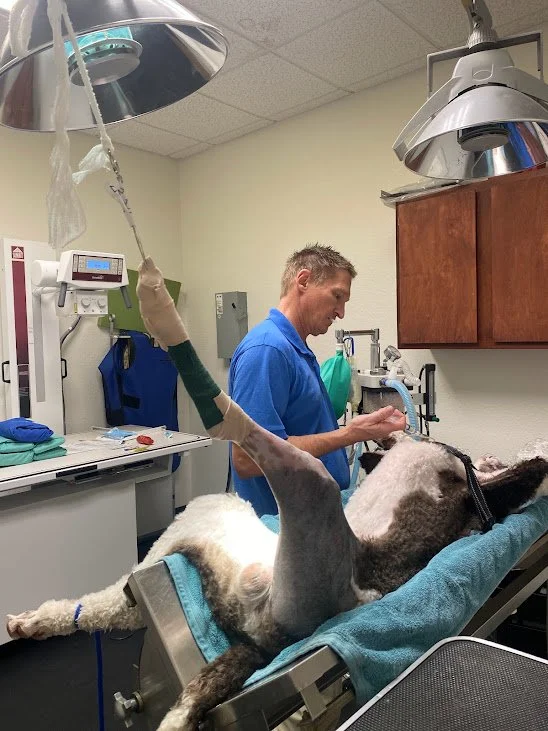
A cruciate ligament injury (also called CCL or ACL tear) is one of the most common causes of hind leg lameness in dogs. The cranial cruciate ligament stabilizes the knee joint, and when it tears—often from twisting, jumping, or wear over time—the knee becomes unstable, painful, and prone to arthritis. While some dogs can manage with conservative care, most benefit greatly from a combination of surgery (like TPLO) and expert rehabilitation.
At Advanced Care Veterinary Services, we specialize in guiding dogs through every stage: pain control before and after surgery, safe recovery, and long-term joint health so your dog can run, play, and live comfortably again.
Signs of a Cruciate Ligament Injury in Dogs
Sudden or gradual hind leg limping (may seem to "come and go" at first)
Sitting with the affected leg extended outward
Swelling or warmth around the knee
Reluctance to bear weight on the leg or jump/climb stairs
Muscle loss (atrophy) in the thigh over time
Clicking or instability when the knee is moved
How We Help with Cruciate Ligament Injuries We take a comprehensive, team-based approach:
Pain Management – Dr. Stramel designs customized plans to control discomfort using laser therapy, acupuncture, medications, and other modalities before and after any surgery.
TPLO Surgical Consultation – We refer to experienced orthopedic surgeons for TPLO (Tibial Plateau Leveling Osteotomy) when needed.
Post-Surgical Rehabilitation – Our team leads recovery with:
Underwater treadmill hydrotherapy for low-impact strengthening
Therapeutic exercises for range of motion and balance
Laser and acupuncture to reduce swelling and speed healing
Home exercise programs to rebuild muscle safely
Non-Surgical Management – For dogs not needing surgery (or owners choosing conservative care), we use joint injections, and rehab to stabilize and strengthen the knee.
Many dogs return to normal activity with our guided plans—often within 3–6 months post-surgery, or sooner with conservative care.
When to Seek Help A cruciate injury rarely heals on its own and can lead to severe arthritis if untreated. If your dog limps, avoids weight-bearing, or shows knee instability, early evaluation is critical. We can assess severity, discuss options (surgical vs. non-surgical), and start pain relief right away.
Next Steps Don't wait for the limp to worsen—schedule a pain and mobility assessment today. Call (972) 394-6422 or use the form below to book. New patients welcome.